
Managing Task Types
Task types can be associated with multiple entities such as assets, shots, sequences, episodes, or edits.
Creating a New Task Type
First, let's create all the Task Types needed to manage and track our production.
From the main menu, select the Task Types page under the Admin section:
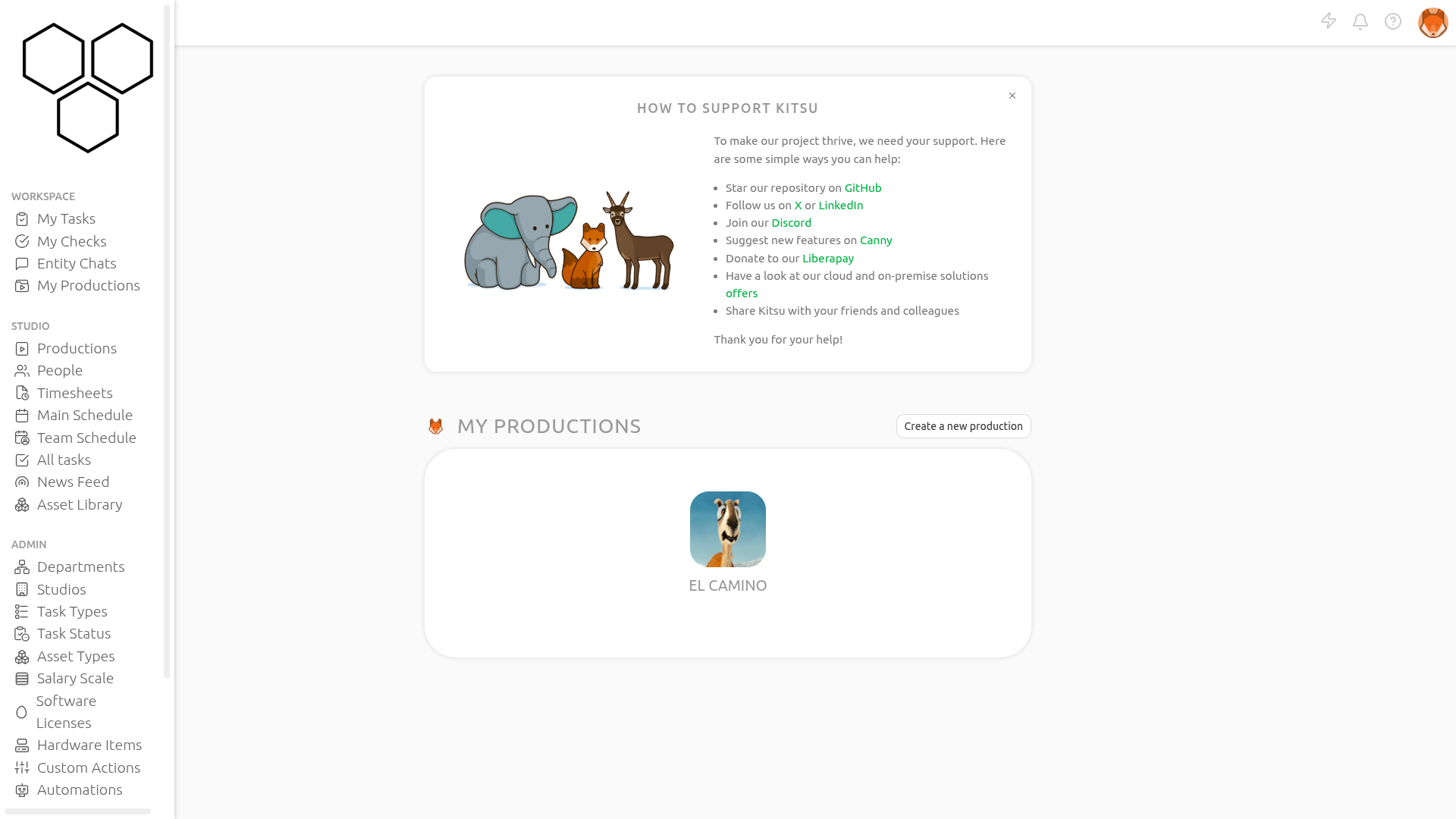
TIP
By default, Kitsu provides some example task types that can be used for a CGI production. You can rename or remove any that are not relevant to your production.
You will notice that these Task Types are already linked to a department.
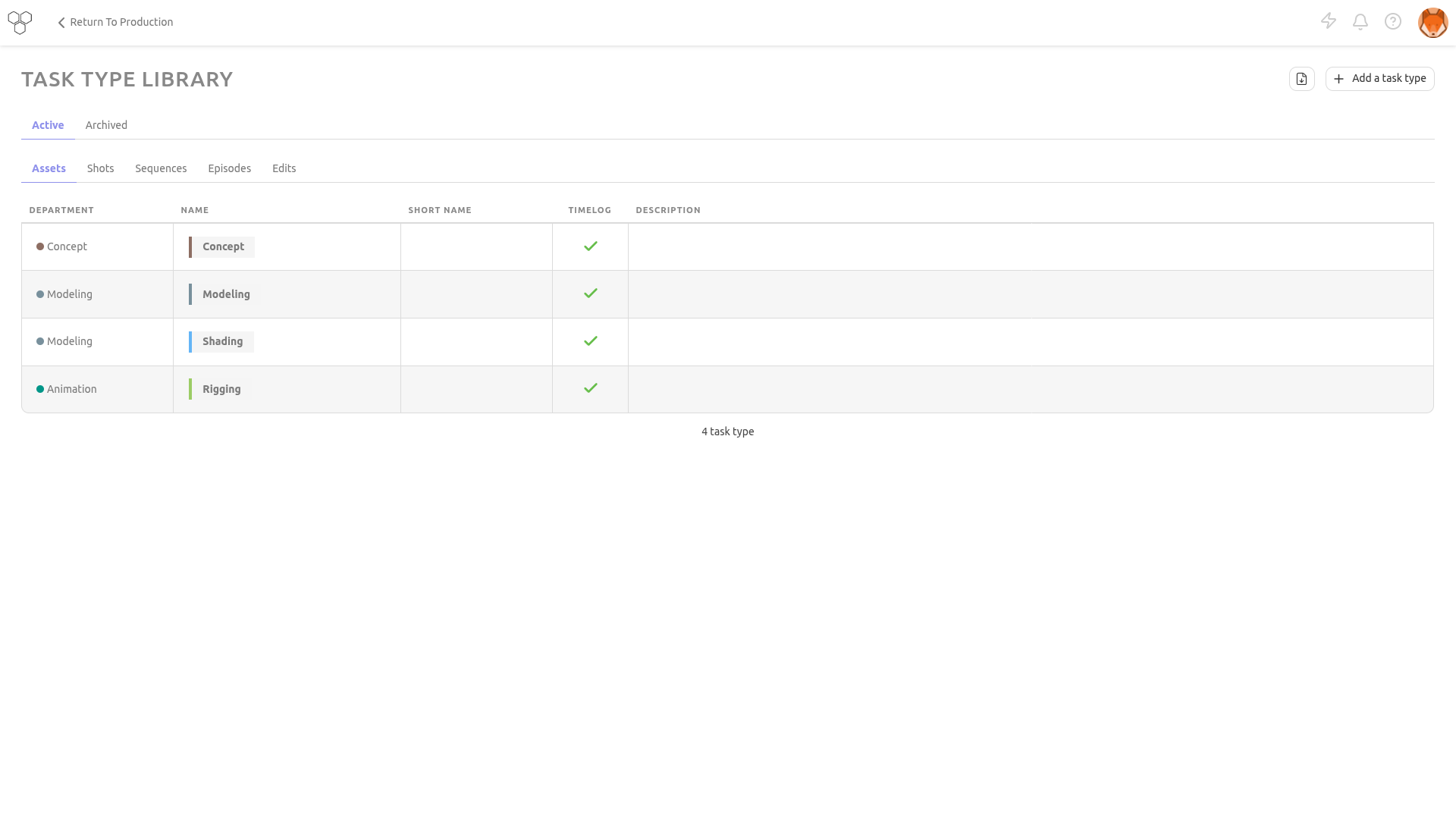
You can click on the Add Task Type button in the top right corner to create new Task Type.
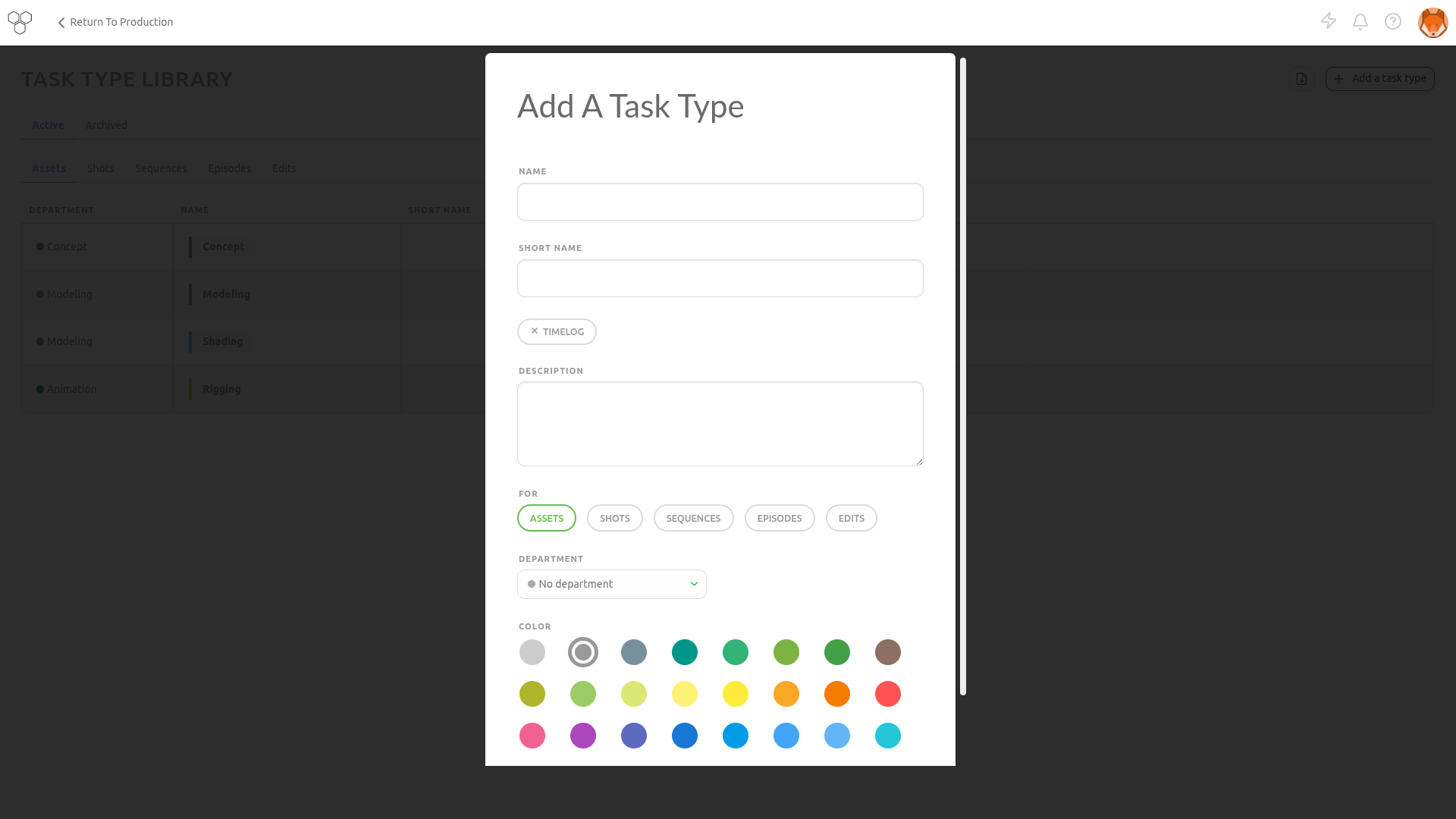
Next, you will need to supply some information about your task type, including:
- The name of the task type. You need a different one for each task type, even if the entities are different.
- The short name appears in dashboards as a concise version of the name
- If team members need to time log their work for tasks with this task type
- For which entity it will be used
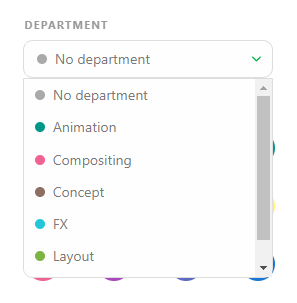
- To which department it should be linked
- The color (this will be reflect in the background color on the main spreadsheet page)
You'll notice that the Departments are available as an option to link task types to. Connecting a department to a specific task type helps your team stay organized.
Click on Confirm to save your changes.
WARNING
Newly created task types will appear at the bottom of the list
To adjust the order, simply click on the Task Type and drag it to its appropriate position in the list.
Congratulations, your task type has now be created in your Global Library!
WARNING
Once you have created your production, you need to add the Sequence, Episode, and Edit task types to your Production Library.
TIP
At any point during production, you can revisit this section to create additional Task Types as necessary and add them into your workflow.
Adding Task Types in a Production
On the Navigation Menu, choose on the dropdown menu the Setting.
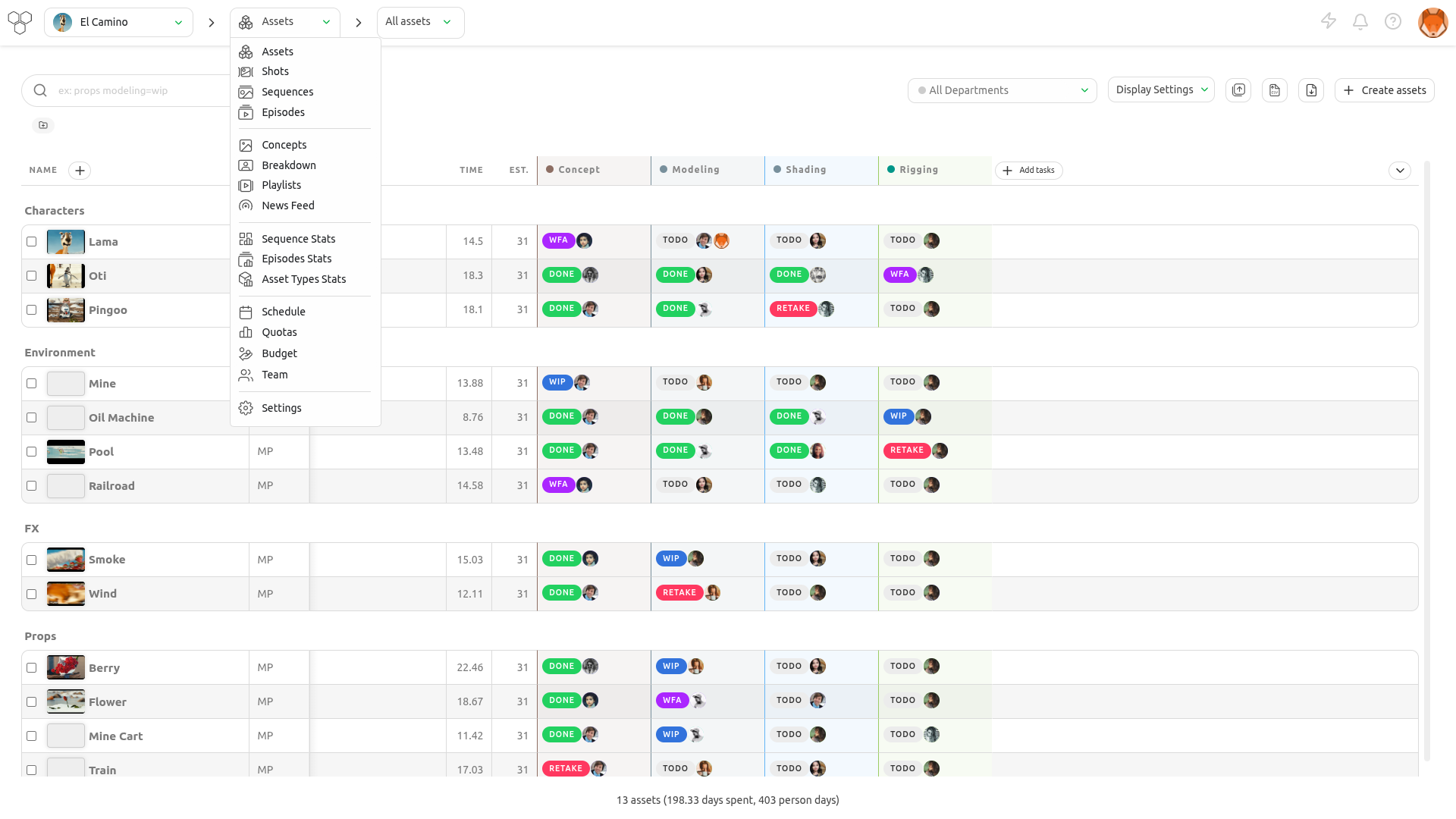
By default, Kitsu will add the Task Types you have chosen when creating the production.
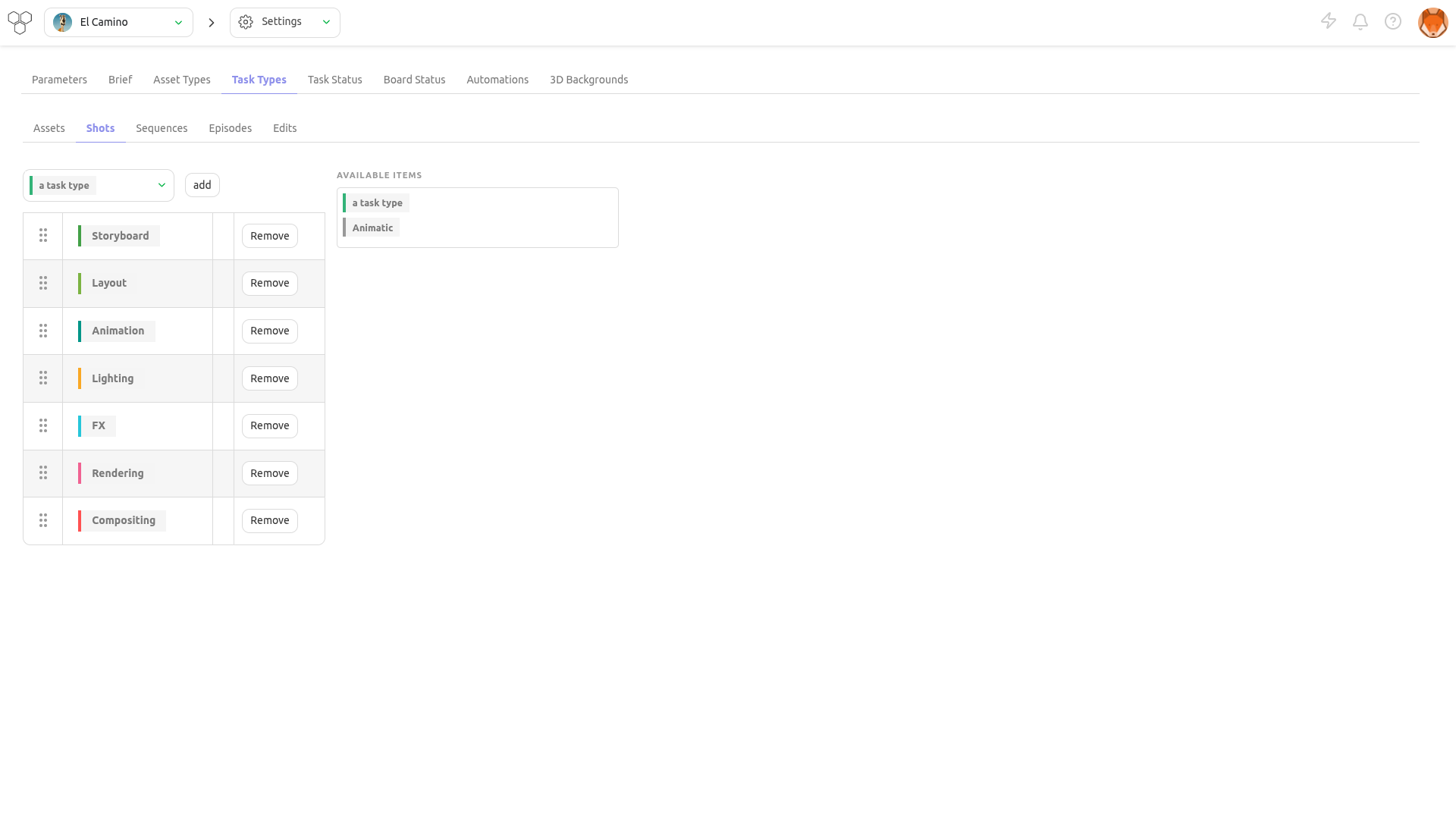
However, you can add or remove specific Task Types if they are created on the Global Library first.
For example, you can import the task workflow from another production in your library.
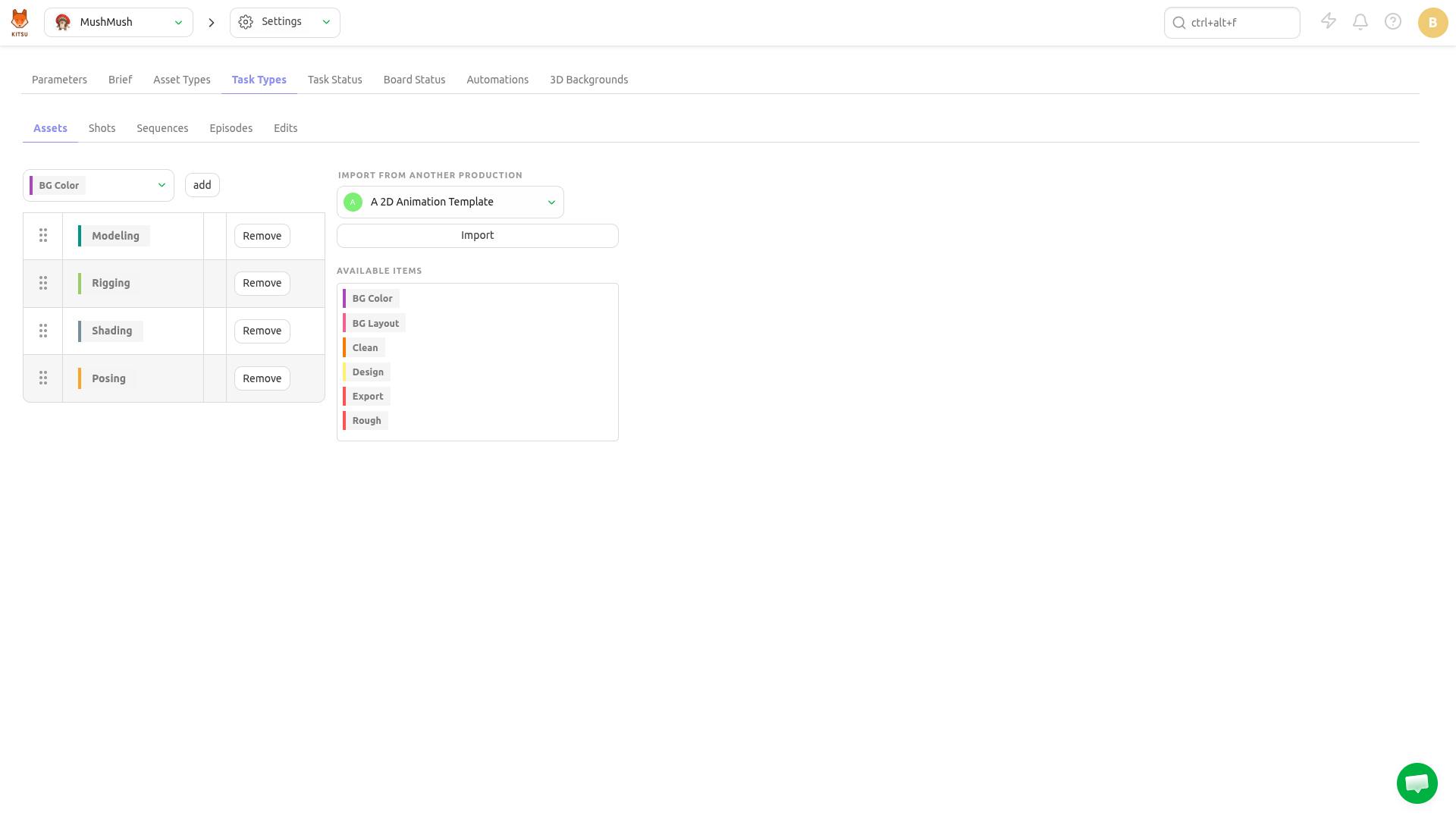
On the Task Types tab, you can choose which production or task type you want to import or remove on this production, validate your choice with the Import button.
TIP
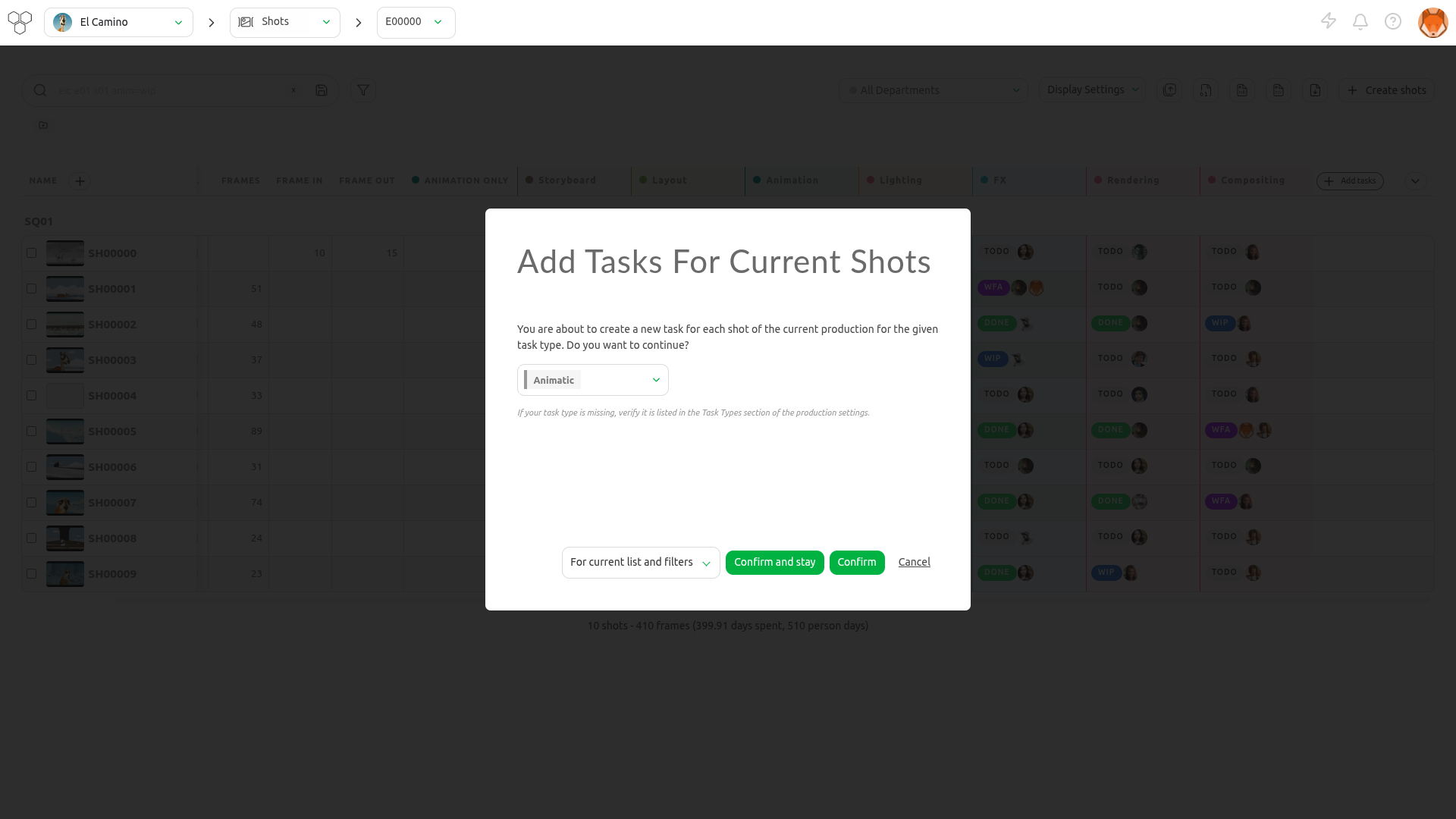
If you add a new task type AFTER creating an asset or shot:
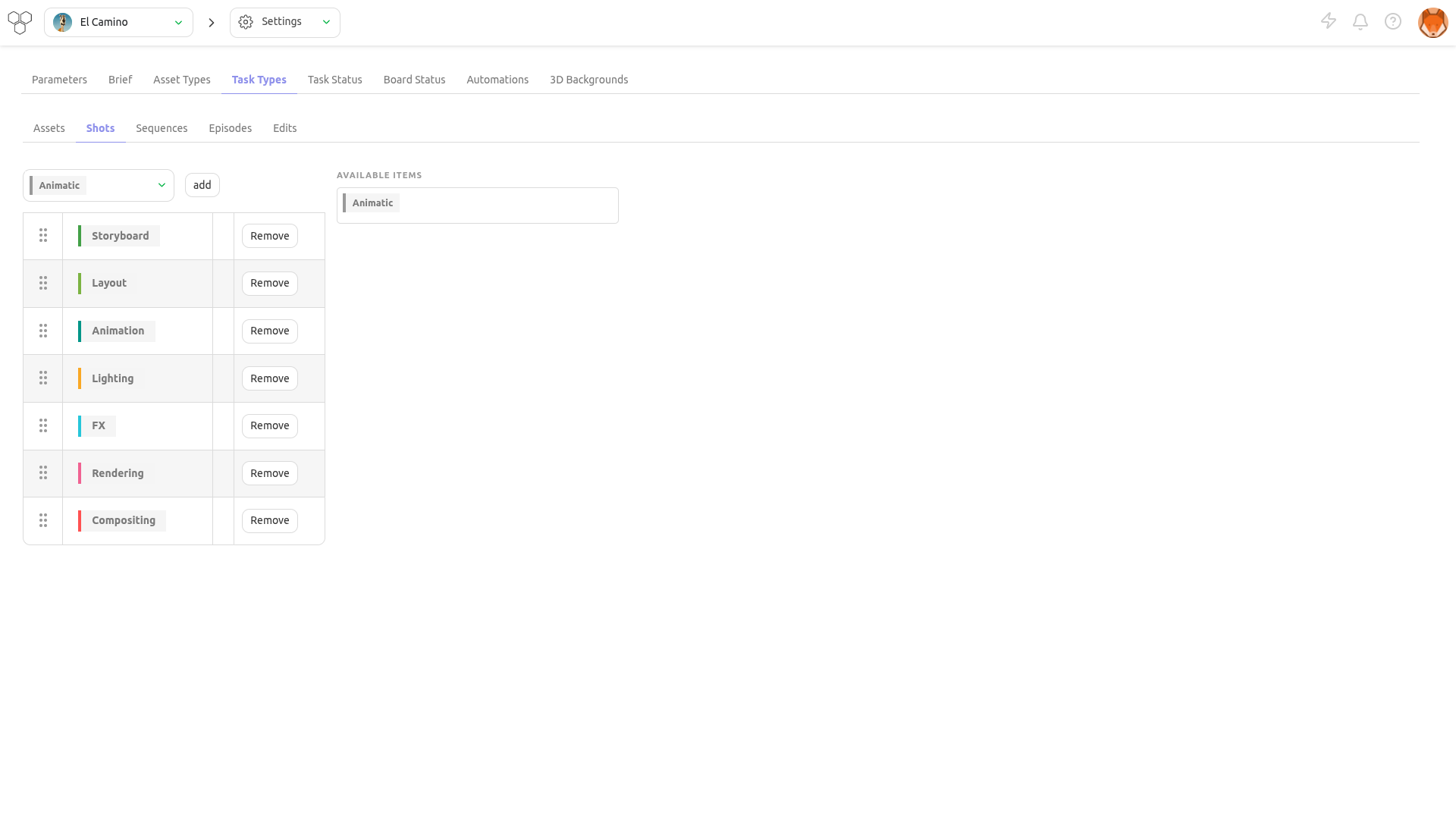
You need to add this task type on the global entity page (shot, asset, sequence, etc.):
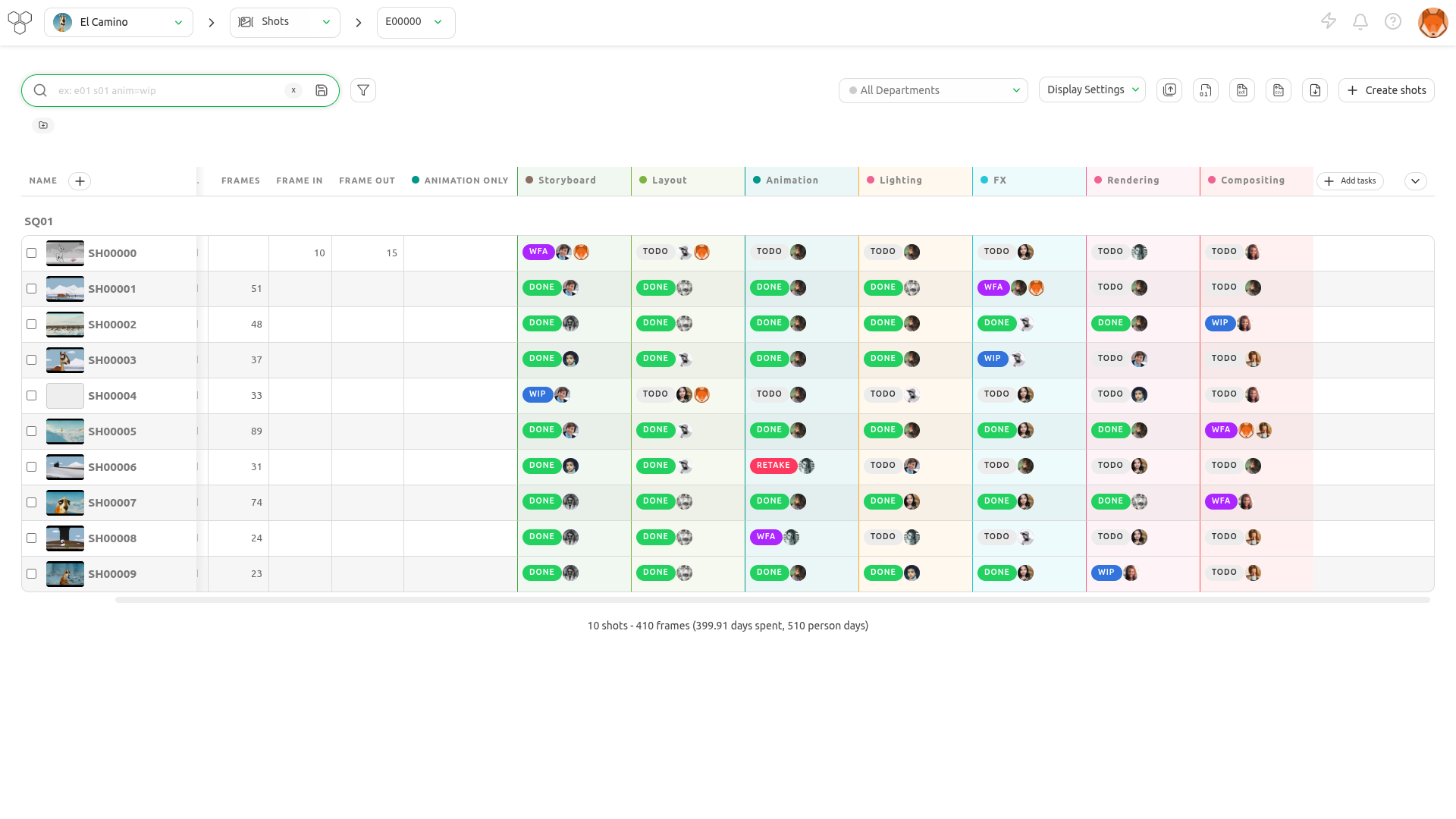
A pop-up appears, and you must select the new task type in the dropdown menu:
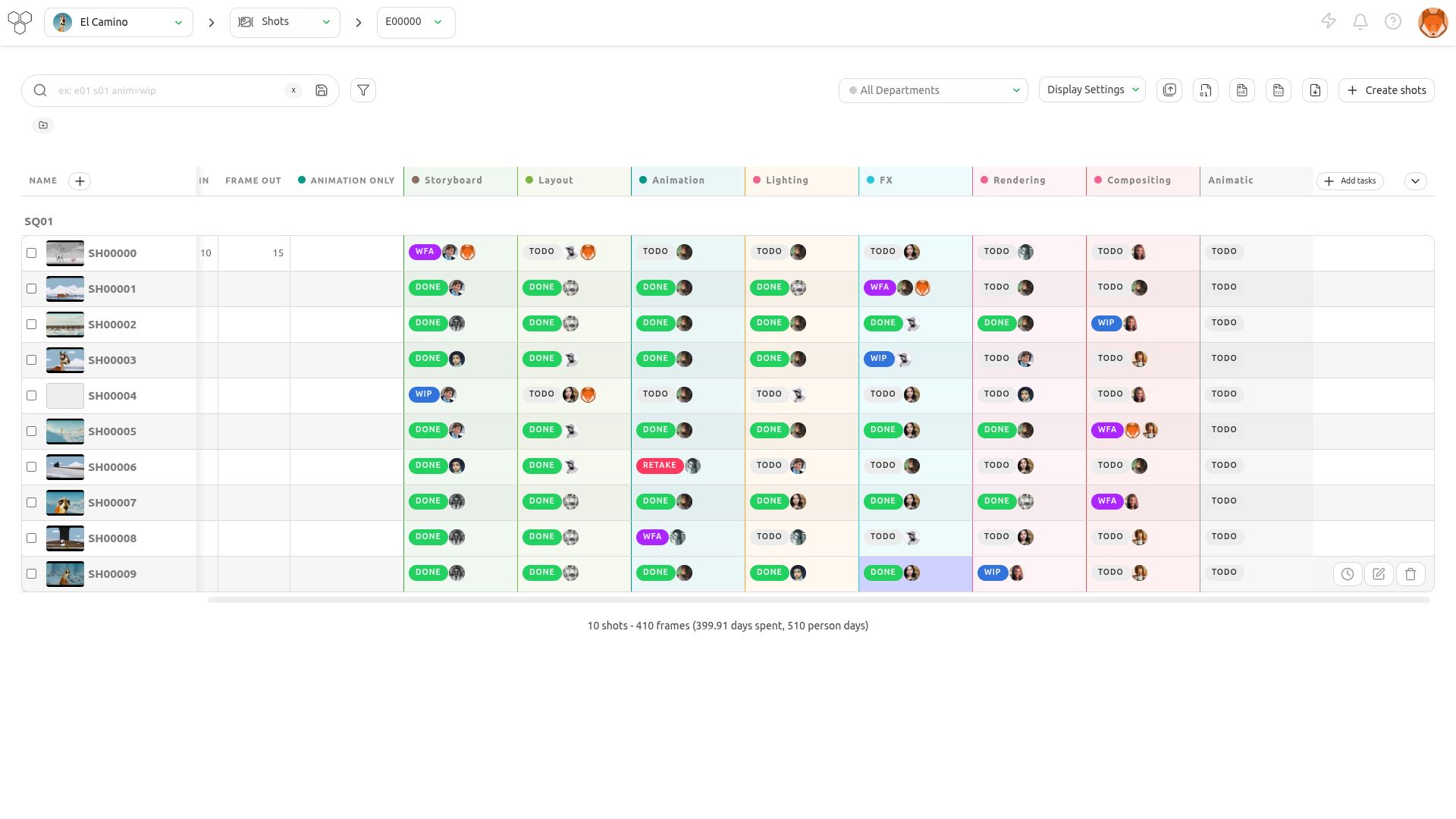
Confirm to see the task type added to your dashboard:
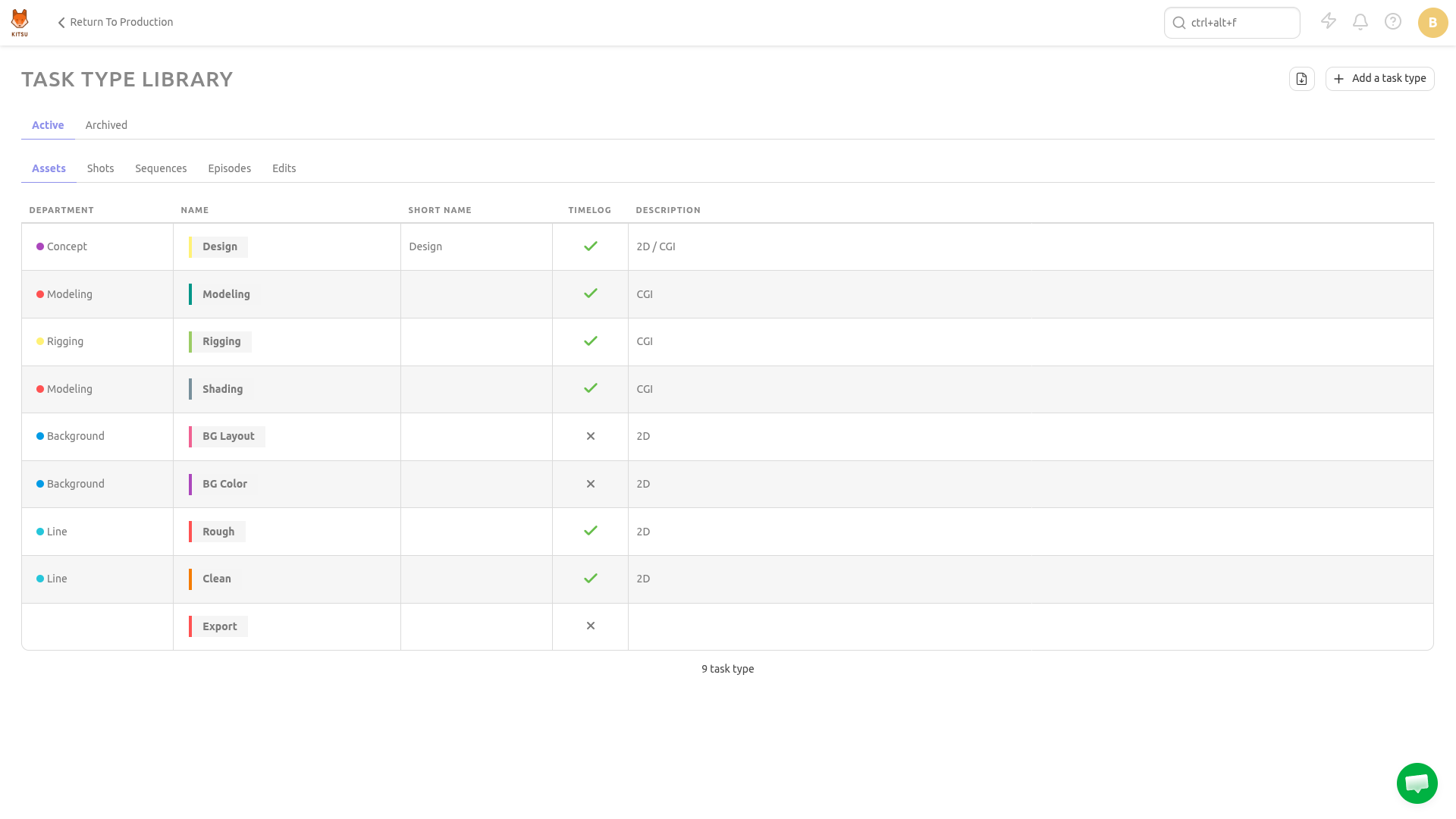
Update a Task Type
Go to Main Menu > Task Types:
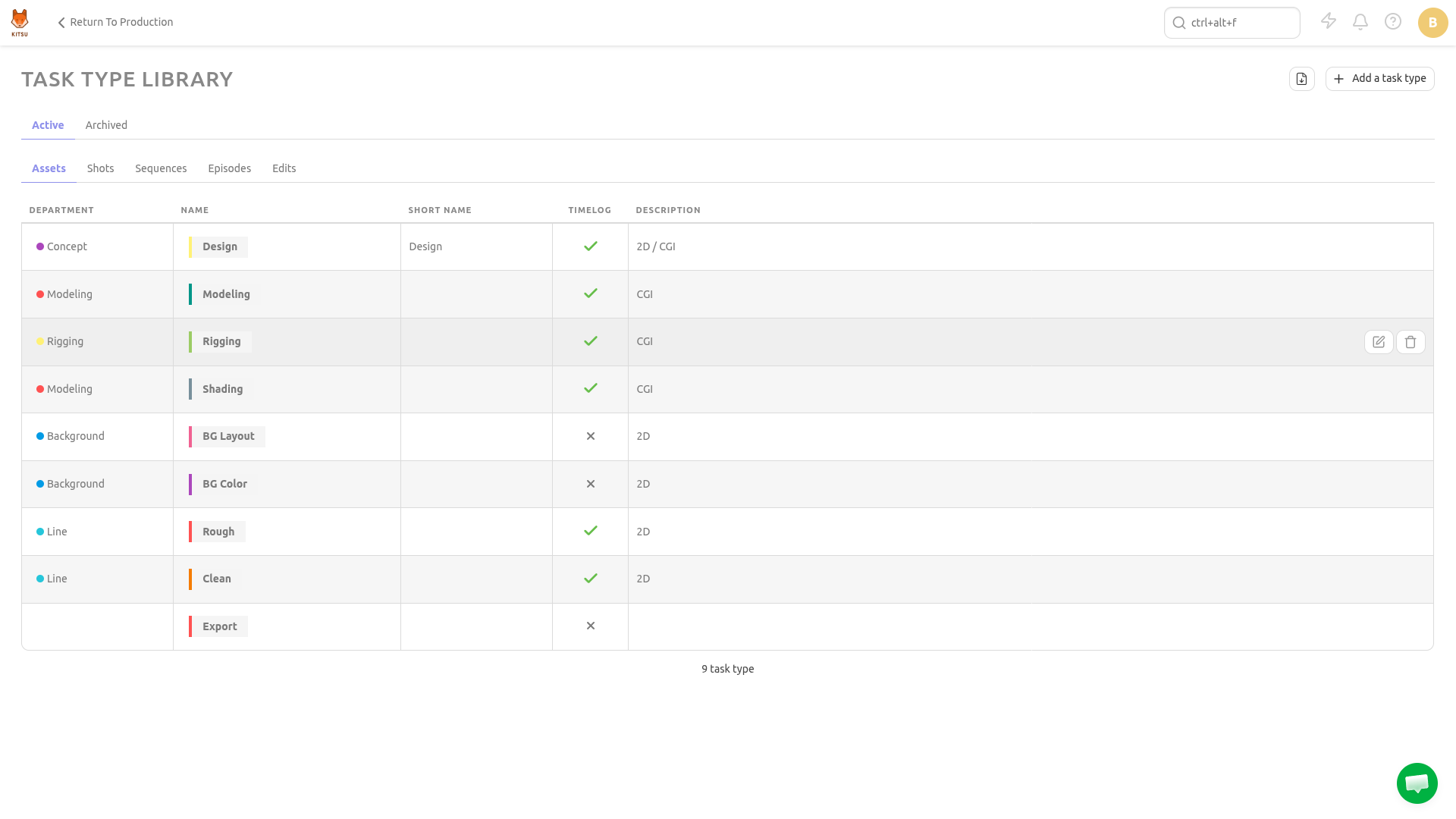
Click the tab for the entity type you need (asset, shot, sequence, episode, or edit) and hover over the task type row you wish to select then click the Edit icon:
Archive a Task Type
If you want to hide a task type but don't want to remove it from the instance, you can edit a task type to archive it.
Remove a Task Type
To remove a task type from your studio's Global Library, go to Main Menu > Task Types and hover over the task type row you wish to select then click the Delete icon:
To remove an task type from your production library, go to Production Menu > Settings > Task Types and click the Remove button to remove the task type from the list:
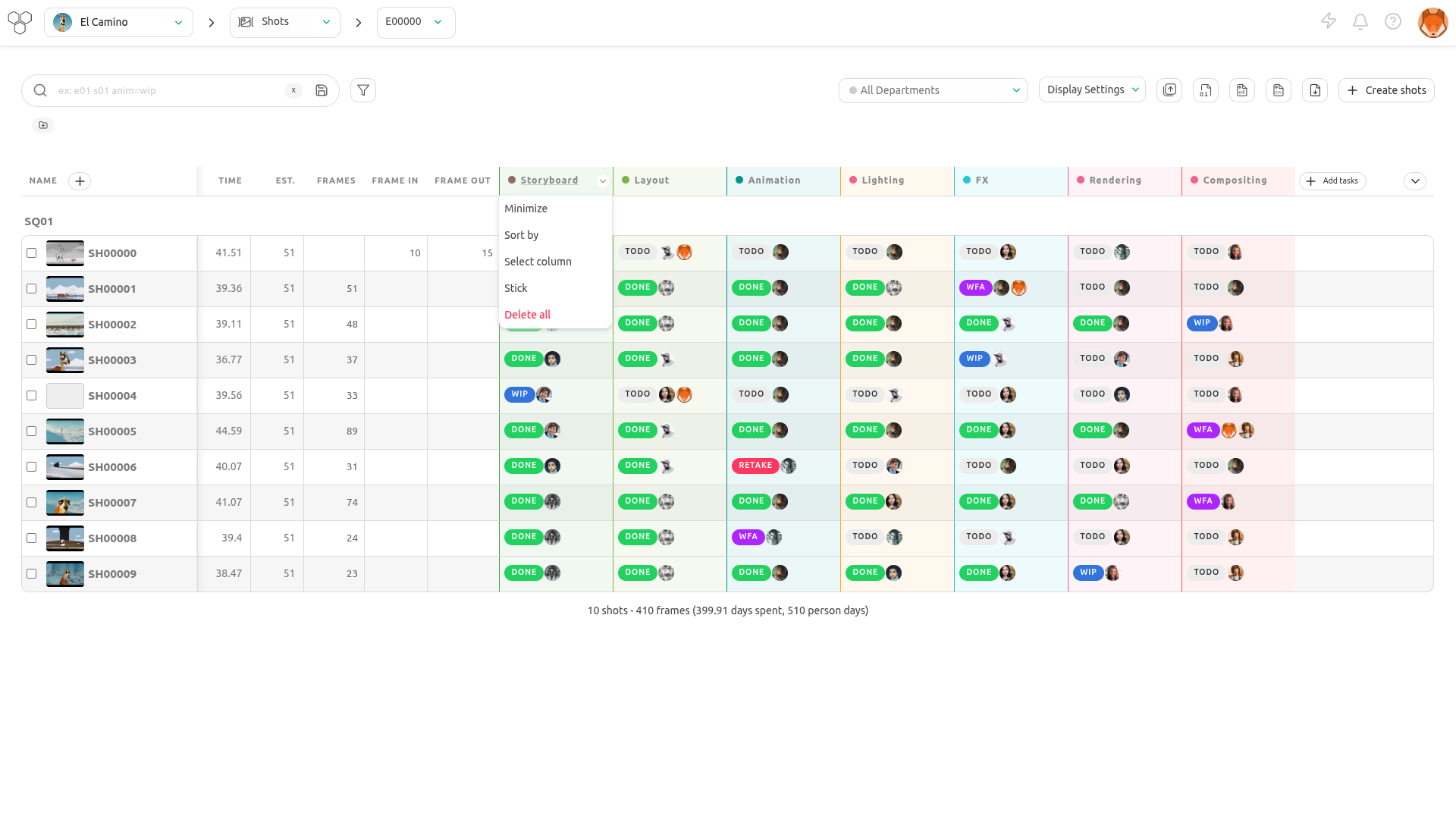
Alternatively, you can also remove a task type from the global Asset or Shot page. Click the chevron next to the Task Type name and select Delete all.
Attention
Removing a task type from the global Asset or Shot page will remove all corresponding tasks, assignments, previews, and comments. This is not reversible, unless you have a backup solution in place.